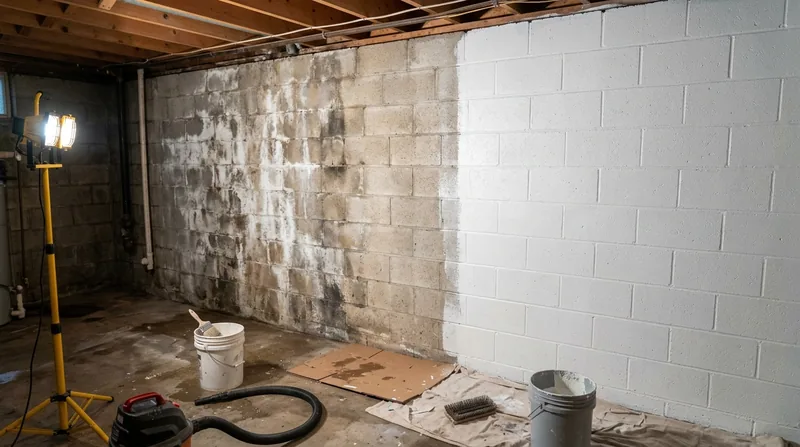




Bloomington sits on flat prairie ground, and that ground is glacial till and silty clay loam that drains slowly and stays wet well into spring. In the 1900s to 1930s brick Victorians, bungalows and foursquares near Downtown and Franklin Park, most basements were built with stone, brick or early block walls that have been wicking moisture for a century. Around the Illinois State University campus, the 1920s to 1950s brick and frame homes carry partly finished basements where damp wall faces ruin paint and framing. Basement Wall Sealing in Bloomington starts with one honest question: is your wall damp from humid summer air, or is water pushing through under hydrostatic pressure? We answer that before we sell anything. If the wall is merely damp and chalky, a sealer is the right fix. If water runs at the wall base after every heavy rain, sealing alone will fail and you need drainage. Call (309) 807-1768 and we will tell you which one you have. Start with a free basement inspection so the diagnosis is made on site, not over the phone.
Why Wall Sealing Matters in Bloomington's Slow-Draining Prairie Clay
The flat prairie around Bloomington does not shed water quickly. Glacial clay soil holds snowmelt and spring rain against the foundation, and the creek valleys around town rise fast after a heavy storm. In the older neighborhoods, that water finds every open mortar joint and hairline crack in stone and early block walls. Efflorescence, the white salt bloom on the wall face, is the visible sign that moisture is moving through the masonry.
- Older stone and brick walls near Franklin Park absorb water and release it inward as damp wall faces.
- Freeze-thaw winters open cracks in early block walls, and each spring those cracks weep again.
- 1990s to 2010s poured concrete basements in north and west Bloomington show damp patches where the form ties and cold joints sit.
- Downspouts that dump at the foundation corner keep the soil saturated long after the rain stops.
Sealing those surfaces slows vapor movement and stops the chalky dust, but it does not hold back a water table. We say so plainly before any work begins.
Key info: A homeowner on a 1920s foursquare near Franklin Park had white efflorescence across the whole south wall and assumed the wall was failing. The wall was sound. The damp came from a downspout discharging two feet from the corner. We extended the discharge, removed the efflorescence and applied a penetrating sealer. No excavation was needed.
Illinois does not license home improvement contractors at the state level, so local verification matters. The City of Bloomington handles building permits and inspection for foundation and drainage work through its community development department at cityblm.org, and you should confirm current requirements there before any structural or drainage alteration.
How We Seal Basement Walls in Bloomington, Step by Step
We do not seal a wall until we know why it is wet. The first hour on site is diagnosis: moisture meter readings, a look at the wall base after rain, the condition of the drain tile and sump basin, and the grading around the foundation. Only then do we choose a sealer, and sometimes the answer is that a sealer is the wrong tool for the job.
- We inspect the wall face, the cove joint at the floor, the window wells and the exterior grade to find the moisture source.
- We remove efflorescence, loose parging and old failing paint so the sealer bonds to sound masonry.
- We fill hairline cracks and open mortar joints with the appropriate repair mortar or epoxy injection where the crack is structural.
- We apply a penetrating sealer on porous stone and brick, or a membrane coating where the wall needs a continuous barrier.
- We correct grading and downspout extensions so the soil at the wall sheds water instead of holding it.
- We test the wall after the next rain and return if moisture still reads high.
If the inspection shows water entering at the wall base under pressure, we stop and talk about an interior drain tile system instead, because no sealer holds back a rising water table.
Key info: A 1950s brick ranch on the east side had a damp wall face every June but no standing water. The sump pump ran fine and the drain tile was clear. We removed the efflorescence, sealed the block with a breathable membrane coating and extended two downspouts to the curb. The wall stayed dry through the next spring thaw.
Sealing Approaches We Use on Bloomington Basement Walls
Not every wall takes the same product. Stone, brick, block and poured concrete behave differently, and a sealer that works on one can trap moisture in another. Here is how we match the approach to the wall.
| Approach | Description | Best for |
|---|---|---|
| Penetrating sealer | Soaks into porous masonry and blocks vapor without a surface film. | Stone and brick walls with damp faces but no running water. |
| Membrane coating | Flexible cementitious or polymer coating that bridges hairline cracks. | Block and poured walls with minor seepage and cold joints. |
| Crack injection | Epoxy or polyurethane injected through ports to fill a crack full depth. | Active cracks in poured concrete walls that leak after rain. |
| Parging repair | Rebuilding the mortar coat over deteriorated block or stone faces. | Crumbling wall faces that no sealer can bond to. |
| Drainage correction | Grading, downspout extensions and window well drainage to cut the water source. | Walls that stay wet because soil at the foundation holds water. |
Basement Wall Sealing Cost in Bloomington: What to Expect
Most wall sealing work in Bloomington starts from $1,500, and that figure covers a typical damp wall face with surface preparation, efflorescence removal and a sealer application. The number moves with wall length, wall material and how much prep the masonry needs. A century-old stone wall near Downtown takes far more labor than a 2005 poured wall in west Bloomington.
Three things drive the price up: heavy efflorescence and failing parging that must be removed first, active cracks that need injection before sealing, and drainage corrections like downspout extensions or regrading. If the inspection shows hydrostatic pressure at the wall base, the honest answer is that sealing alone will not fix it, and we price the drainage solution instead. Get two or three estimates and compare what each one includes, not just the total. Our full pricing overview breaks down the ranges.
What to Look For When Hiring a Wall Sealing Contractor Near Bloomington
Basement wall sealing near me searches turn up plenty of names, and most of them are general handymen who buy a bucket of sealer at the hardware store. A dedicated waterproofing contractor will inspect before quoting, will tell you when sealing is the wrong answer, and will put the scope in writing. Ask each contractor the same questions and compare the answers.
- Confirm the contractor carries liability insurance and workers compensation, and ask for a certificate.
- Get two or three written estimates that list prep work, materials and drainage corrections separately.
- Ask for references from Bloomington or Normal jobs on the same wall type as yours, stone, brick, block or poured.
- Ask who pulls any permit the local building department requires for structural or drainage work.
- Check that the warranty is transferable and read what it actually covers.
If a contractor quotes a sealer without inspecting the wall base or the drain tile, keep looking. Reach us through the contact page and we will schedule the inspection.
Basement Wall Sealing Near Me: What Bloomington Homeowners Should Know
When you search for basement wall sealing near me, the results mix waterproofing specialists, foundation repair firms and plumbers. Each solves a different problem. A plumber fixes the sump discharge line. A foundation firm handles structural movement. A waterproofing specialist reads the wall, the soil and the drainage together and tells you which fix your basement actually needs.
In Bloomington, the failure mode that dominates is spring snowmelt and heavy rain pressing against slow-draining glacial clay. The wall base seeps first, then the cove joint, then the lower block courses. If you see water only after a storm, the problem is drainage, not the wall surface. If the wall is damp and chalky year round with no standing water, sealing is the right call. We serve Bloomington and the surrounding towns, including Normal and Heyworth, and we give the same straight answer in every one of them.
When Sealing Is Enough and When It Is Not
We would rather lose a sealing job than sell you one that fails in the first spring thaw. Here is the line we draw, and it is the same line every time we walk a Bloomington basement.
- Sealing is enough when the wall is damp, chalky or blooming with efflorescence but stays dry to the touch after rain.
- Sealing is enough when the moisture comes from humid summer air condensing on cool masonry.
- Sealing is not enough when water runs at the cove joint or the wall base during or after a storm.
- Sealing is not enough when the water table sits high in spring and pushes against the footing.
- Sealing is not enough when the wall is bowing, and that wall needs structural repair before any surface work.
When the diagnosis points to pressure, an interior perimeter drain and sump basin relieve the water before it reaches the floor, and that is the honest fix. Call (309) 807-1768 and we will tell you which side of the line your basement sits on.
Basement Wall Sealing in Bloomington: Pricing Guide
| Service | Price | Details |
|---|---|---|
| Damp wall face sealing | Starting at $1,500 | Surface prep, efflorescence removal and sealer on a typical basement wall run. |
| Membrane coating | Starting at $1,900 | Flexible coating over block or poured walls, priced by wall length and prep. |
| Crack injection before sealing | Starting at $450 per crack | Epoxy or polyurethane injection through ports, priced by crack length and activity. |
| Drainage correction | On estimate | Grading, downspout extensions and window well work priced after an on-site look. |
| Travel | Included | In Bloomington and surrounding areas, no separate call-out or mileage fee. |
| Estimate | Free | Response within 24h at (309) 807-1768, no obligation to book. |
Indicative pricing, the exact cost depends on square footage, finish, and site access. Free personalized estimate within 24h at (309) 807-1768.


